
How to Keep Cool This Summer, and During Heatwaves
We’re in the middle of our second heatwave this summer… and its only June. There are lots of things you can do – small and big to keep cool at home.
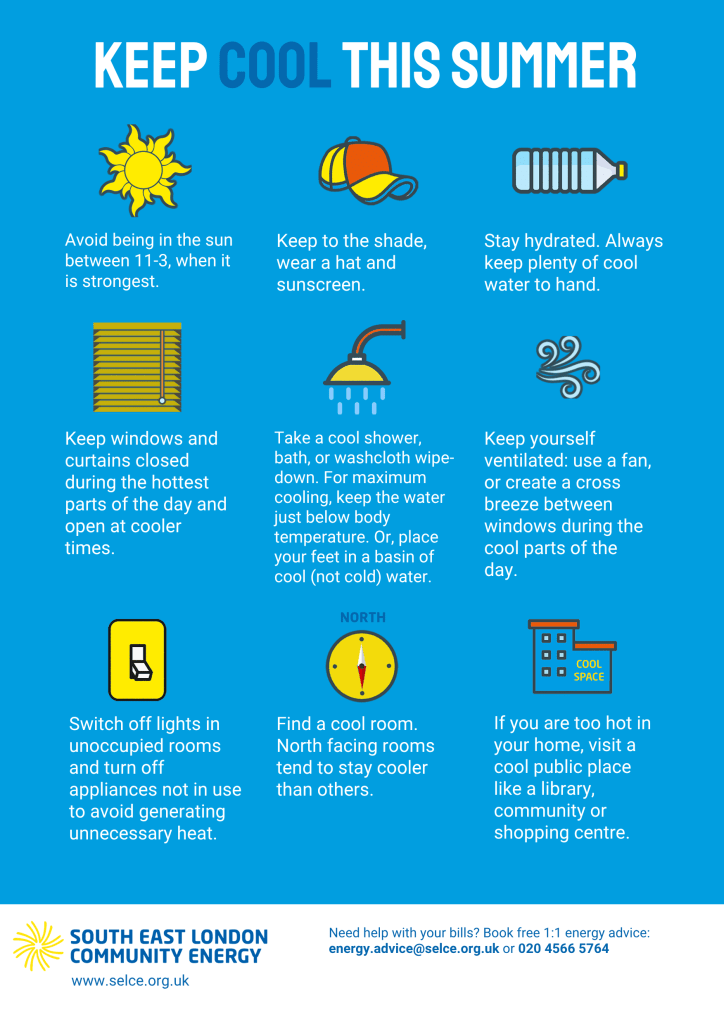
1. Avoid being in the sun between 11-3, when it is strongest.
2. Keep to the shade, wear a hat, and put on sunscreen when going outside.
3. Stay hydrated. Always keep plenty of cool water to hand.
4. Keep windows and curtains closed during the hottest parts of the day and open at cooler times. This is particularly true for south facing walls, where the sun is the strongest during the day, otherwise more heat will be let in.
5. Take a cool shower, bath, or washcloth wipe-down. This is particularly effective before bed and it can effectively trick your body into thinking its cooler. Don’t do this if you have come from intense heat as sudden temperature changes aren’t good for your body. For maximum cooling, keep the water just below body temperature.
6. Place your feet in a basin of cool (not cold) water when you can throughout the day.
6. Keep yourself ventilated: use a fan or create a cross breeze between windows during the cool parts of the day. To create a cross breeze, open a smaller window on the breezy (windward) side of your home and a large window on the other side to allow for air circulation. Fans can also help boost this cross breeze, and the average fan costs around 3p per hour to run so they are worth using!
7. Switch off lights in unoccupied rooms and turn off appliances not in use to avoid generating unnecessary heat.
8. Find a cool room. North facing downstairs rooms tend to stay cooler than others.
9. If you are too hot in your home, visit a cool public place like a library, community or shopping centre.
Guide to Home Temperatures
24°C – very warm, could be unsafe for heart conditions
18-21°C – comfortable temperature
18°C – minimum for being comfortable
12-16°C – fairly cold, could be unsafe for respiratory conditions
12°C – cold, could be unsafe for heart conditions
Signs of Heat Exhaustion
The signs of heat exhaustion include:
– Tiredness
– Dizziness
– Headache
– Feeling sick or being sick
– Excessive sweating and skin becoming pale and clammy or getting a heat rash, but a change in skin colour can be harder to see on brown and black skin
– Cramps in the arms, legs and stomach
– Fast breathing or heartbeat
– A high temperature
– Being very thirsty
– Weakness
The symptoms of heat exhaustion are often the same in adults and children, although children may become irritable too. If someone is showing signs of heat exhaustion they need to be cooled down and given fluids.
What should I do if I see someone with heat exhaustion?
If they can be cooled down within half an hour, then heat exhaustion is not normally serious.
NHS advice says:
– Move them to a cool place.
– Get them to lie down and raise their feet slightly
– Get them to drink plenty of water – sports or rehydration drinks are also OK
– Cool their skin – spray or sponge them with cool water and fan them. Cold packs around the armpits or neck are good too
However, if they do not recover within 30 minutes, then what follows is heat stroke.
It is a medical emergency and you should call 999.
People with heat stroke may stop sweating even though they are too hot. Their temperature could go over 40C and they might have seizures or lose consciousness.
Selce’s energy advice service is also available year-round, not just in Winter – reach us on the phone 020 4566 5764, or via email: energy.advice@selce.org.uk.