
How to Deal with Damp, Mould and Condensation

Damp, mould, and condensation can be a problem in any home. This is especially true in the colder months – in this post, we’ll learn to identify each of these issues, and explain how to deal with them for a healthier home.
Damp
What is Damp?
Damp is a general term meaning excess moisture in the home. When we talk about rising and penetrating damp, that refers to specific issues where moisture gets into the walls, roof, or floor of a building – often from the outside.
Rising Damp
– Rising damp is where ground water moves up through the house from ground up. Normally this is due to damage to a protective barrier known as a damp-proof course – a horizontal barrier in walls to prevent moisture from rising through the structure of the property.
– Some households may have never had a damp-proof course installed, whereas in other houses the course may become damaged over time.
– Rising damp often appears as a tidemark and occurs at the bottom of a wall.
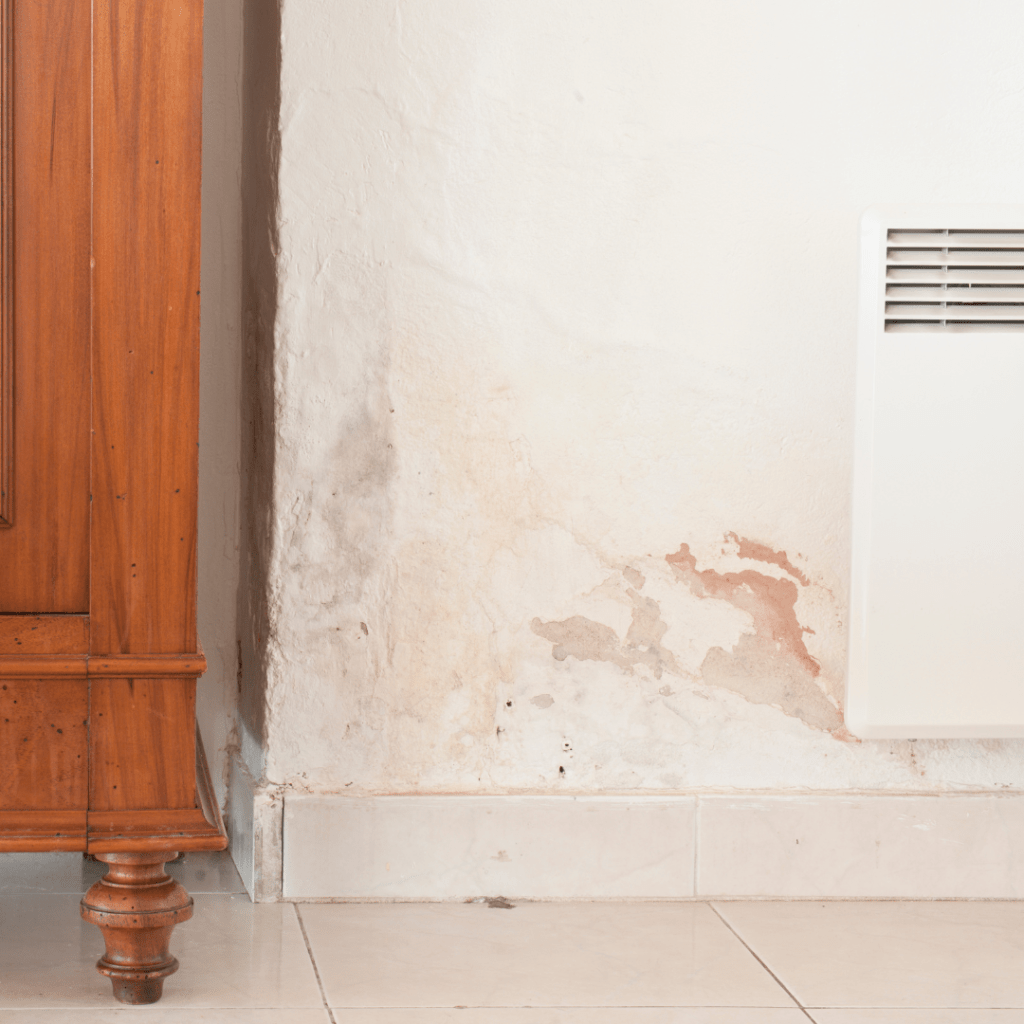
Rising Damp – Image courtesy Centre for Sustainable Energy
Penetrating Damp
– Penetrating damp is where water seeps through the walls from the outside and usually occurs because of structural damage to the walls, roof or floor of the property.
– This could mean, for example, an issue with roof tiles, gaps around windows and doors, or leaks coming from guttering.
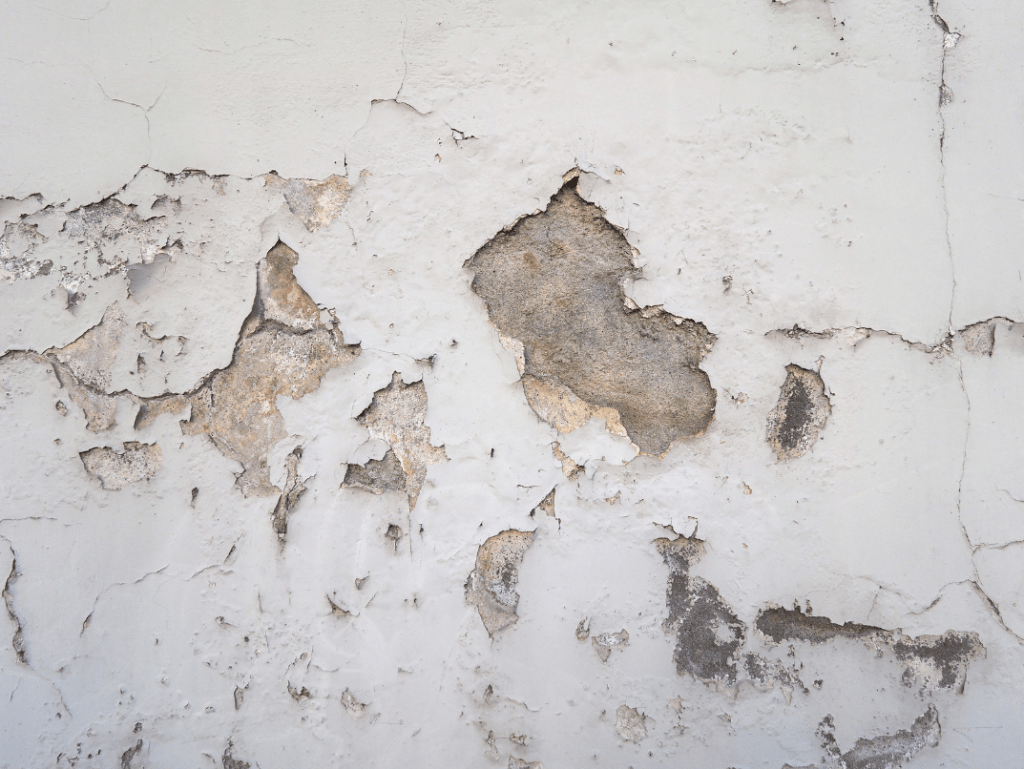
– Penetrating damp often appears as a concentrated damp patch on surfaces, as shown in the image below.
Condensation
What is Condensation?
Condensation happens when moist air hits a cold surface, like a window, and condenses. It appears as water droplets running down that surface, as shown in the below image.
Condensation usually occurs through inadequate ventilation – when windows are kept shut for long periods; excessive moisture being produced through cooking and drying clothes inside – particularly on radiators; lack of insulation causing those cold spots where condensation occurs, as well as low heating which means lower surface temperatures.
Condensation is higher in winter due to overall increased temperature difference between the inside and outside, and more moisture inside the home down to cooking with closed windows, and drying clothes indoors.
Mould
What is Mould?
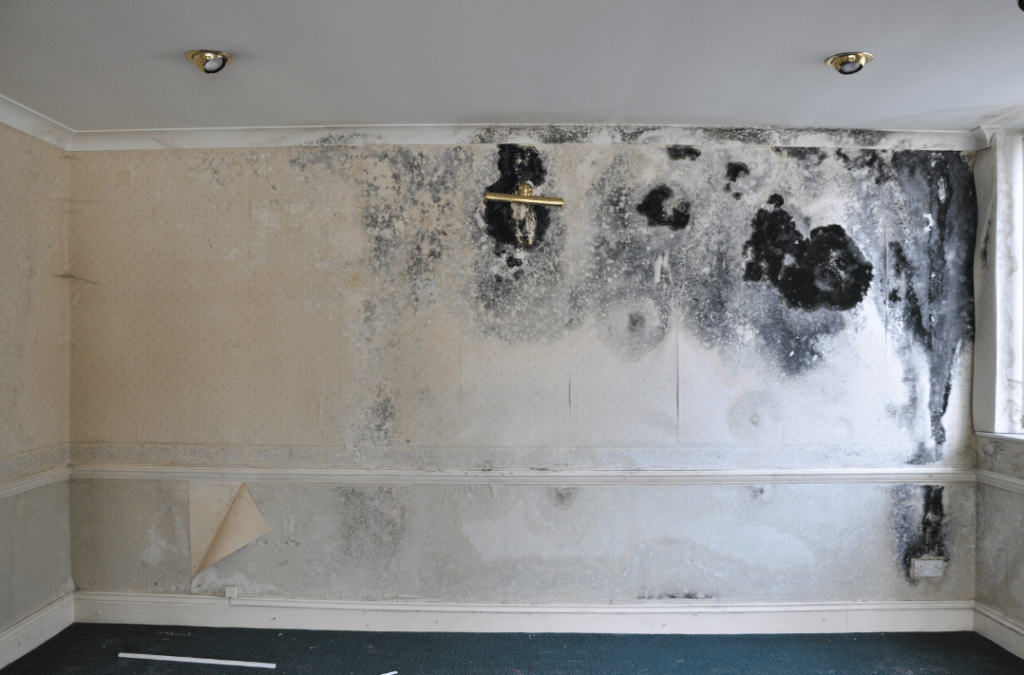
Mould is a microscopic fungus that grows in damp places and takes the form of fuzzy black, white, or green patches on the wall that have a musty smell. See the image below for a common example.
Condensation is the leading cause of mould in the UK, and it is often found in areas with excessive moisture production – referred to as ‘wet rooms’ – such as kitchens and bathrooms.
What’s the Link between Damp, Mould and Condensation?
Damp, condensation and mould are all interlinked. Condensation is often the first stage and most common occurrence and, if left untreated, can lead to damp concentrated in one area, or several damp patches in more areas.
Persistent damp patches become the perfect environment for the growth of mould, which is the last stage, can create structural problems in the long term, and could be the trigger to several health issues, such as allergies and aggravate existing respiratory problems.
You can reduce condensation in the home by:
– Using lids on the pots when cooking and turning on the extractor fans in the kitchen; windows can also be opened for extra ventilation and to get rid of smells.
– After showering or taking a bath, keep extractor fans operating for a little while, or open the windows to ensure the water vapour goes away quickly.
– Air dry clothes on a rack close to open windows, on balconies, gardens, or near radiators. Never dry clothes on top of radiators if the heating is on, as more water vapour will be produced.
– In general, if the heating is off and the temperature outside is not that cold, you could open the windows in your property for 10 to 20 minutes to allow fresh air in, which is always beneficial for your health. It should be done daily, especially in wintertime, to avoid condensation as well.
But if you already have damp or mould, the problem might need special attention: sometimes a mould wash, or repainting, might not be enough if your habits don’t change. And if you have rising or penetrating damp, you might have to check gutters to stop any blockage, look for leakages that might not be very apparent, for instance, to tackle the source of the problem. If you cannot identify it, a damp surveyor can help.
What are the Impacts of Damp, Mould and Condensation in the Home?
– Impacts on health: damp, mould, and condensation can all lead to respiratory issues, allergic reactions and mental health problems, particularly for those who are vulnerable.
– They can also lead to structural problems in the home, meaning people are living in an unpleasant environment. Extended damage to walls, plaster, and roof can eventually reduce property value.
– Children, older people, and those with skin or respiratory conditions are particularly at risk from moisture build-up.
How to Deal with Damp, Mould and Condensation
Damp
– Dealing with penetrating damp usually requires specialist help, but it can also have a DIY solution if you have the ability: it may require repairing leaking roofs and drainage pipes, replacing rotten windows or doors, and fixing cracked walls.
– Rising damp can also be very complex, involve building work and either repairing or installing a damp-proof course. Support from a specialist may be needed in these cases.
– If you experience damp, condensation and mould at home, it’s crucial to identify where they are coming from and report them immediately if you’re in social/council housing or a private rental. If you are a homeowner, employing a damp surveyor to identify the issue quickly is a great option.
Mould
– Cleaning mould off the walls using a mould spray can work, but it is crucial to check which mould sprays work with what surface. You can find this information on the bottle. There is evidence against using mould sprays as well, with the particulates inside them making the situation worse. Bleach or white vinegar can also be used if you are financially constrained – although they are said to be effective, their use comes with caveats. Never mix them, as the combination can create toxic chlorine gas.
– The best option to deal with mould is through insulation and ventilation, ensuring you are using extractor fans and opening windows throughout the day to allow for air circulation
Condensation: HIVE
Hive is an acronym which covers four things to do to avoid damp and mould caused by condensation developing in your home:
– Heating: Ensure you heat your home, even the rooms you’re not using, to at least 18 degrees. Inadequate heating allows for colder surface temperatures – increasing the risk of condensation. For more information on ideal home temperatures, please see our previous article on ideal home temperatures in each space in the home, insulation methods, and the importance of ventilation.
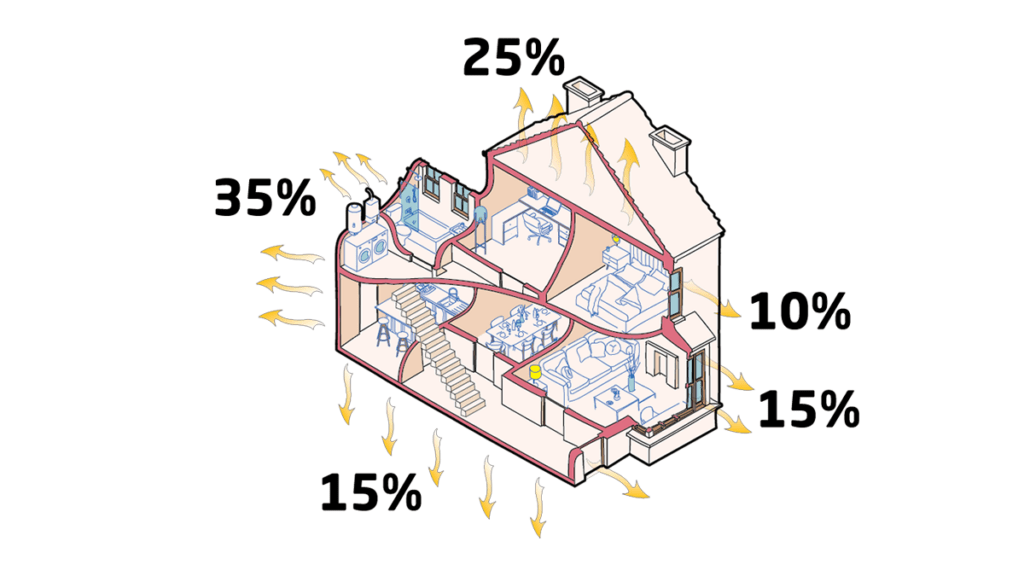
– Insulation: Improving insulation can stop heat from escaping, below is an image showing where heat is lost throughout the home. One affordable way of improving insulation is by fitting draughtproofing strips around windows and doors. In time, they both increase comfort and lower heating bills.
– Ventilation: Allowing fresh air to circulate around your home can reduce the risk of damp, mould and condensation. This can be done through opening windows in the property at least once a day for 10 to 20 minutes, keeping air bricks and vents clear, and moving furniture away from walls to allow air to circulate.
– Excessive Moisture Production: Simple steps can reduce the amount of moisture produced in the home, particularly from the kitchen and bathrooms. For example, by putting lids on pots and pans when cooking, closing the bathroom door when showering and opening windows throughout the day, especially if drying clothes inside as this can produce a lot of moisture – except for when it is raining as that only lets in more moisture. And finally, using extractor fans during cooking and after showering if you have them.
– One thing to keep in mind is that sometimes you have to dry your clothes inside. When doing so, try to do so in the room with most space, which is well ventilated and where you can open a window for long periods. You can also place a portable dehumidifier in the room to remove excess moisture, if ventilation is not adequate, or windows cannot be open for longer. Never dry your clothes on a radiator, if they are turned on, as this can reduce airflow further into the room, lead to more damp, and increased bills.
Help is Available from SELCE
If any of these issues ever arise in your home, our friendly advisors are more than happy to support you in removing them and taking steps to make sure they don’t come back again.
Find out more about ways you can get in touch with our energy advice team.
Further Reading
Centre for Sustainable Energy: Condensation, damp and mould – Centre for Sustainable Energy
National Energy Action: Dealing with Damp and Condensation
Energy Saving Trust: How to get rid of damp – Energy Saving Trust
Which: What Kind Of Damp Is Affecting My Home?
BBC: Black mould: How dangerous is it in the home and how can it be treated?