
Carbon Monoxide Risks in the Home - What You Need to Know

Carbon monoxide (CO) is a poisonous, colourless, odourless, and tasteless gas often called the ‘silent killer’, produced when fuel-burning appliances like gas boilers, cookers, heaters, fires, or generators are faulty, poorly installed, or badly maintained.
Signs of its presence in the home include yellow or orange gas flames, excess condensation, and soot or staining around appliances.
Symptoms in people range from headaches, dizziness, nausea, and breathlessness to collapse or loss of consciousness. These symptoms would only mainly occur inside the home.
Carbon monoxide alarms are essential for early detection and should be placed 1–3 metres from appliances, regularly tested, and replaced every 5–10 years. If CO is suspected, you should turn off the gas supply and appliances, ventilate the property, leave immediately, and contact emergency services.
Regular annual gas safety checks by qualified engineers are also important to prevent exposure.
What is Carbon Monoxide?
Carbon monoxide, also known as CO, is a poisonous gas which can be harmful if you breathe it in.
Its an odourless, invisible and tasteless gas which is often referred to as the silent killer.
Where does carbon monoxide come from?
Carbon monoxide is usually produced if one of your gas heating or cooking appliances isn’t working properly, installed properly or if they are poorly maintained.
The appliances that can produce carbon monoxide include:
– Gas boilers
– Gas cookers
– Gas or paraffin heaters
– Wood, gas and coal fires
– Portable generators
Carbon monoxide can also be produced by using barbecues or camping stoves inside and turning on vehicles or lawn mower engines in an enclosed space, such as a garage.
Signs that Carbon Monoxide May Be Present in the Home
There are several indicators in the home that show carbon monoxide may be present. The main ones are:
– Flames on a gas cooker can appear orange/yellow instead of blue.
– Condensation may be prevalent on windows and walls.
– Soot or yellow/brown staining on or around appliances.
– Signs and symptoms of carbon monoxide poisoning in people
The 6 main symptoms that people may have when experiencing carbon monoxide poisoning are headaches, nausea, dizziness, breathlessness, collapse and loss of consciousness.
However, people often point to exhaustion being the first symptom even before the above.
These symptoms can also be linked to other illnesses, but one thing that may point to specifically carbon monoxide poisoning is experiencing them only when you’re at home.
Carbon Monoxide Alarms
– Carbon monoxide alarms are crucial to have in every home.
– They detect and alert us to the presence of carbon monoxide before any symptoms develop.
– Please see a picture of a carbon monoxide alarm below. These are the ones that we give out:
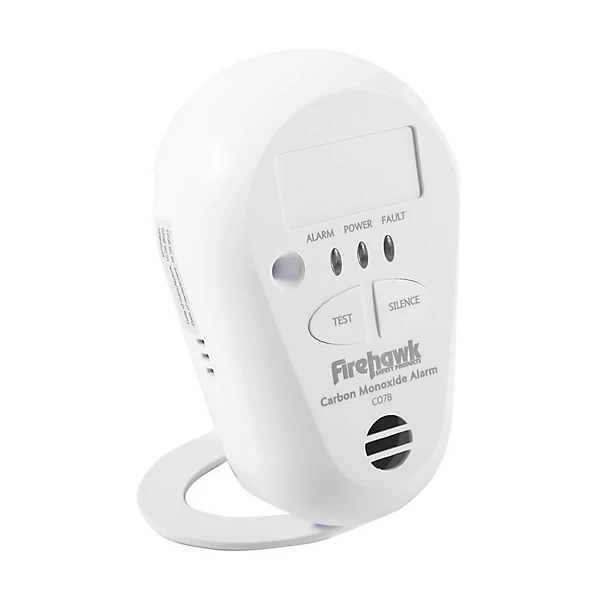
Where should you place your Carbon Monoxide Alarm
– Most likely, you will already have a carbon monoxide alarm in your home, usually mounted on a wall or ceiling.
– If not, Selce can provide you a portable carbon monoxide alarm which can be moved.
– If you have a portable alarm, it’s best placed in a well-ventilated area 1-3m away from any gas appliance, for example, in the kitchen, hallway, or near your boiler.
– If you can, try get an alarm for every room that has a gas appliance in it.
– Avoid placing your alarm inside the boiler cupboard, as this can lead to false alarms.
Testing your Carbon Monoxide Alarm
– One thing we sometimes forget is to test the carbon monoxide alarm to make sure it’s working.
– This is normally as simple as pushing the button marked ‘test’ on the device – simple.
When you press and hold it, it should sound loudly which indicates it’s working. Alarms should preferably be tested once every 2 weeks, but once a month is also good.
– Carbon monoxide alarms usually have a shelf life of 5-10 years depending, so it’s crucial to replace the alarm when it has died or if it is over 7 years old.
– If you are in council/social housing or are private renting, it is the responsibility of the landlord to replace broken, dead, or faulty carbon monoxide alarms when you inform them.
– If you are a homeowner, it is your responsibility. Carbon monoxide alarms usually cost anywhere between £15-£50 and can be purchased from many retailers.
What to do if you think carbon monoxide may be present?
If your alarm sounds continuously or you feel like you have the symptoms above, there is likely to be carbon monoxide present in the property. Below is a 5-step protocol to follow:
1. Turn off your gas supply if possible. For this, you need to know where your gas meter is. It is usually situated outside in the front/side of your house, in your garage, in the kitchen, under the stairs, or in the back of your house. Once located, to turn the gas meter off, turn the emergency control valve (red tap handle) 90 degrees clockwise or anticlockwise.
2. Turn off all fuel burning appliances if you can, such as gas cookers, boilers, and fires.
3. Open all doors and windows if you can, this will allow for adequate ventilation.
4. Make sure everyone leaves the house.
5. Call the National Gas Emergency Service on 0800 111 999 to alert them of the issue. If you are feeling unwell, ring NHS 111, and if there is an emergency, ring 999.
Gas Safety Check
– A preventative step to protect against carbon monoxide poisoning is to have all your gas appliances checked once a year, this is called a gas safety check. This check should be done once a year by a registered gas safe engineer.
– For rental properties, social housing, and council housing, the responsibility of arranging and paying for gas safety checks lies with the landlord. If they do not get you one, it is important to contact the landlord to inform them that you need a gas safety check, and if they still don’t do it, you can contact Southern Gas Networks (SGN), who are our local gas network. You can contact them on 0800 912 1700 or visit their website.
– A gas safety check does usually cost between £60 to £120. But in some cases, they do come free of charge. You should contact your energy supplier to ask for a gas safety check, as they will have gas engineers on hand to do that. Eligibility for a free gas check varies by supplier, but some common factors will be if you are on the priority services register, receive means tested benefits, or have a health condition made worse by the cold. See further information here.
Useful links
NHS: Carbon monoxide poisoning
Cadent Gas: Locating your meter and turning off the gas – Cadent Gas Ltd